

I distinguish them by a single criterion: Virtue."


Always be excellent and remain superior to others…~ Homer, Iliad
EXCELLENCE = preeminence, supremacy, valor
Liddell&Scott
“Virtue, wonderful Pursuit in life”
~ Aristotle, hymn to Virtue

“If you intend to become anything less than what you are capable of becoming, then you will be mis-erable all the days of your life. ”
~ A. Maslow, Humanistic Psychology
PROGRAM DETAILS
📅 Day: Saturday
🕐 Time: 10:00 a.m. – 1:15 p.m.
📍 Venue: Handicraft Park of Anopolis
CONTACT – INFORMATION
☎ Phones: (0030) 698 3522647 – (0030) 697 5628411
✉ Email: info@elstea.net
“I Learn by Philosophizing – Always Excel”
A unified approach to the holistic development of children.
The program “I Learn by Philosophizing and always Excel” is a comprehensive pedagogical proposal that integrates children’s cognitive, emotional, ethical, and social development.
The program is an original synthesis of research findings and applied educational practices and introduces:
- The Philosophical Virtues, as they are revealed in the Ethics of Aristotle and Plutarch. Every human being is, by nature, endowed with the ability to attain virtues, however, he needs to learn them and put them into practice in his life. Parents and educators, like great sculptors, can craft masterpieces in children’s souls. Once a child grows up, it is difficult, if not impossible, to educate him or her. It is important for children to get used to every good habit from a young age, so that it becomes second nature to them. Virtues are the Lessons that will serve as the foundation upon which they will build their adult lives. (Plutarch).
- Philosophical thinking in Education, as highlighted by M. Liman in Philosophy for Children P4C and by Haynes in Children as Philosophers (Learning through inquiry and dialogue in Primary Education, trans. G. Tzavara).
- The concept of Excellence, as approached in Philosophical thought. Children are encouraged to confront themselves. To cultivate their abilities, and to unfold their highest possible potential.
The Western lifestyle we have adopted invests, in terms of our children’s superiority, in the acquisition of specific knowledge for livelihood purposes and in the necessity of acquiring skills for “survival.” From excellence we have shifted to competition, defined as superiority over others, using criteria that are “self-serving” and alien to virtues. The result: manifestations of competition, such as jealousy, arrogance, envy, anger, criticism, anxiety, feelings of inferiority, and low self-esteem (Saïtis, Ch., Darra, M., Psarri, K.).
- Ancient Greek in rendering the meanings of virtues and lessons. The Greek language, with its etymology and rhythm, both teaches and “touches” the mind and the soul. Research has shown that the Greek language is of supreme value and an excellent means of promoting well-rounded cognitive and spiritual development.
The view that is gaining ground these days, that ancient Greek has the potential to reprogram the dyslexic brain, is supported by research data.
The program has a three-hour duration and is organized into three distinct course units:
- The first unit, which lasts two class periods, is devoted to the course “Critical Thinking and Emotional Intelligence: Discussing in Hellenic way”. The children study Aesop’s Μyths, Greek Μythology, and selected texts from Greek Literature, and they converse in Ancient Greek. Through Socrates’ method of questioning—exploratory and revelatory learning—the meanings, virtues, and lessons they reveal are extracted. Children are taught to think in a more rational way, and their critical thinking skills are developed. At the same time, they observe their emotions. They are encouraged to identify the thought underlying the emotion and to connect that thought with the emotion. Emotional intelligence is cultivated. The meanings, virtues, and lessons are absorbed through the Ancient Greek language, with which the children come into contact. In addition to critical thinking and emotional intelligence, self-control, a sense of responsibility, empathy, solidarity, love, friendship, respect, and other qualities are cultivated, while psychic resilience is developed.
- The second unit includes the Music Education course. Damon of Athens, a prominent musician, educator, and philosopher of music (5th century B.C.), argued that music is not merely entertainment, but also has ethical and educational power and is the most optimal means of education. In the Music Education course, children will learn to distinguish between different musical modes and understand their influence on character development.
- The third course unit is focused on team activities. Group activities include clay and hand-weaving loom workshops, theatrical games, board games, and more. Children are encouraged to put virtues and lessons into practice, thereby developing life skills and psychic resilience.
PROGRAM
Duration |
Course Unit |
|---|---|
| 10:00-10:45 | Critical Thinking and Emotional Intelligence: Discussing in Hellenic way |
| 11:00-11:45 | Critical Thinking and Emotional Intelligence: Discussing in Hellenic way |
| 12:00-12:30 | Music Education |
| 12:30-13:15 | Team Activity |
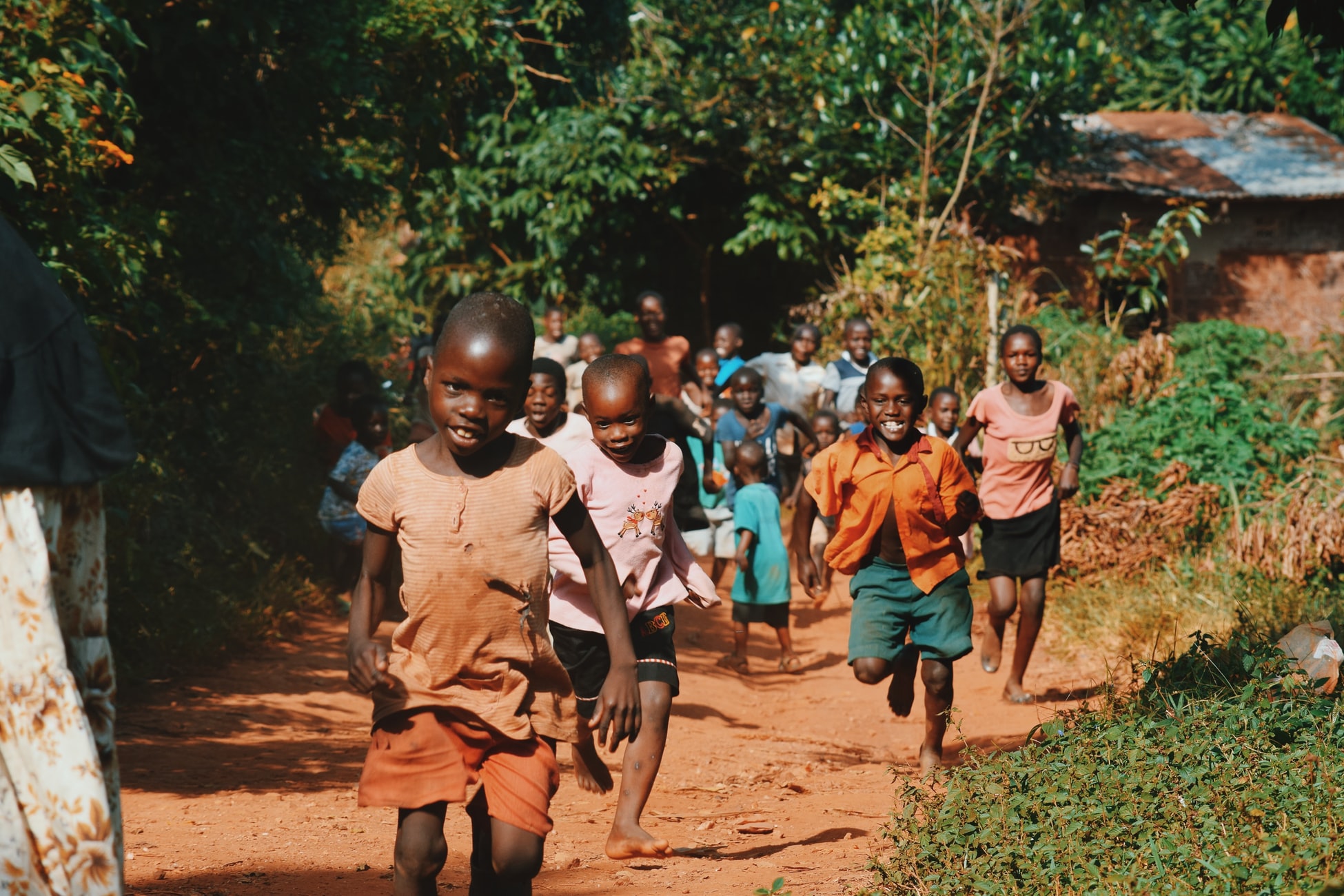
* Main Photo: Seth Doyle
Aristotle. (2004). Nicomachean Ethics (Vols. 1–2) (D. Lypourlis & P. Gkolitsis, Trans.). Zitros Publications.
Aristotle. (2006). Politics (Vols. 1–2) (D. Papadis, Trans.). Zitros Publications.
Avgelis, N. (2016). Introduction to Philosophy. Stamoulis Publications.
Chanock, K. (2006). Help for a dyslexic learner from an unlikely source: The study of Ancient Greek. Literacy, 40(3), 164–170. https://doi.org/10.1111/j.1467-9345.2006.00444.x
Cole, M., Cole, S. R., & Lightfoot, C. (2002). The Development of Children. Gutenberg Publications.
Dewey, J. (2001). Democracy and Education (F. Terzakis, Trans.). Heridanus Publications.
Haynes, J. (2009). Children as Philosophers: Learning through Inquiry and Dialogue in Primary Education (G. Tzavaras, Trans.). Metaichmio Publications.
Lipman, M. (2006). Thinking in Education (G. Tzavaras, Trans.). Patakis Publications.
Manesi, S. (2012). The Role of Emotions in Teaching and Learning: Educational Strategies for Developing Emotional Intelligence.
Mavropoulou, E. I. (2012). The Influence of Knowledge of the Ancient Greek Language on the Psychointellectual Development of Children in Primary Education [Doctoral dissertation, National and Kapodistrian University of Athens]. National Archive of Doctoral Dissertations. https://doi.org/10.12681/eadd/29106
Neofytou, L., & Koutselini, M. (2006, June). Emotional Intelligence: Epistemological Challenges and Limitations [Conference paper]. 9th Conference of the Cyprus Educational Association, Nicosia, Cyprus.
Piaget, J. (2001). The Language and Thought of the Child: Studies in the Logic of the Child. Kastaniotis Publications.
Plutarch. (1995). Ethics. Kaktos Publications.
Stathi, A. (2019). Dyslexia: The Challenge of the Timeless Flexibility of the Greek Language.
Tzavaras, G. (2009). Dialogical Activity as an Opportunity for Democratization.
Tsegou, I. (2005). The Learning of Ancient Greek as a Facilitating Factor in the Psychoeducational Development of the Child: A Pilot, Non-Interventional Field Study.