“physis kryptesthai philei”

As a cycle of work comes to an end, the person who confronts their own self—who “struggles within”, as Kazantzakis describes in Askitiki, seeks a “place” to rest. To quiet the mind, to soothe the heart, and to ponder. What have I done? What have I neglected? Whom have I hurt or wronged? When did I fail to stand courageously before my own inner enemy? … And then… to offer gratitude and celebrate those moments when he “fought”, as well as the harvest of the fruits of his labor. To gaze high, to look around, to look within, to thank all of creation and seek its wisdom to make it a dowry for the next round of his battles.
From the depths of the centuries, Heraclitus has bequeathed to us fundamental principles for understanding the wisdom of the nature that surrounds us, the wisdom that lies hidden within us, “physis kryptesthai philei” (“nature loves to hide”) and which unfolds when we choose to seek it.
Everything in nature changes, nothing remains static. Every change is the result of a conflict, from the confrontation between two opposing forces. Good-bad, movement-stasis, knowledge-ignorance, hate-love… The entire process of change is governed by universal order and harmony, logos, and the creative conflict aims to unite opposites and to restore order and harmony.
Every human being has the ability to understand the inner order, the logos that is common to all, but most people live as if they possess an individual mind. For a person to be in a position to understand the inner order that governs the world, the logos, one must first turn inward and come to know thyself. One must come to realize that truth is not found in personal reasoning, and turn one’s individual understanding toward universal truth, toward the common Logos. «ἐδιζησάμην ἐμεωυτόν» (I inquire into myself), Heraclitus continues, so that I might understand my own nature—the very nature that is oriented toward my genuine welfare and fulfillment.
Immanuel Kant argued that we do not know things “as they are in themselves,” but as they appear through the forms of human perception. The human mind organizes sensory data through its personal concepts, resulting in us knowing things as they appear and not as they actually are. Critical thinking is the ability that, accompanying a healthy mind, connects it to the fundamental universal principles of nature.

We live in an era where technological civilization tries to reveal what nature hides, offering an abundance of material goods and means, possibilities for knowledge and communication, services, saviors, and conveniences, all for the wisdom and happiness of people. However, the more that is revealed, the more new questions arise; conflicts—both external and internal—intensify; and inequality, injustice, misery, loneliness, and a profound crisis of meaning worsen.
In his lectures on Heraclitus, Heidegger links technology to a mode of revelation that tends to obscure other ways in which truth is revealed. Technological thinking limits reality as something measurable and exploitable. The way of uncovering the reality of nature, as Heraclitus mentions, is being lost.
Aristotle, in “Metaphysics”, states that truth is not presented as something that is revealed externally to human beings, but is the result of cogitation and rational understanding. The way to get started is from what is most known to us toward what is most known in nature. From perception to universal truth.
This approach frees us from the “passions” we carry within us. “Prisoners” of our ignorance that gave rise to experiences of fear, guilt, anger, lack of mental strength, alienation. Plato in Timaeus states that, our ignorance and fear are part of creation, and the Benevolent creator allows ignorance and the “passions” it gives rise to. Yet He has granted us the opportunity to pass through these passions, so that we may be in the perspective of knowing our own nature and, consequently, His goodness, and thus be in the perspective of experiencing true prosperity.
The Apostle Paul, in his Epistle to the Romans, states that “even suffering can be turned to good within God’s plan”.

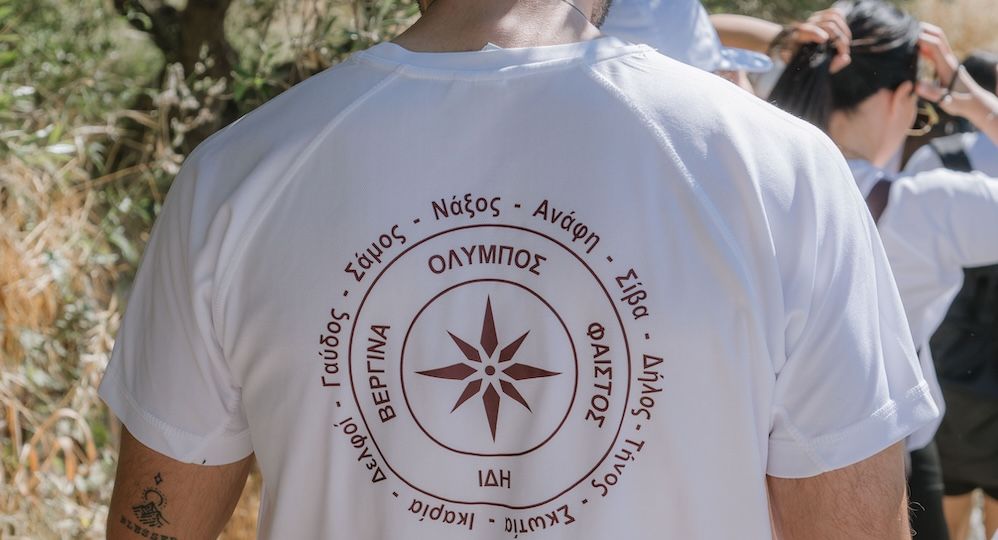
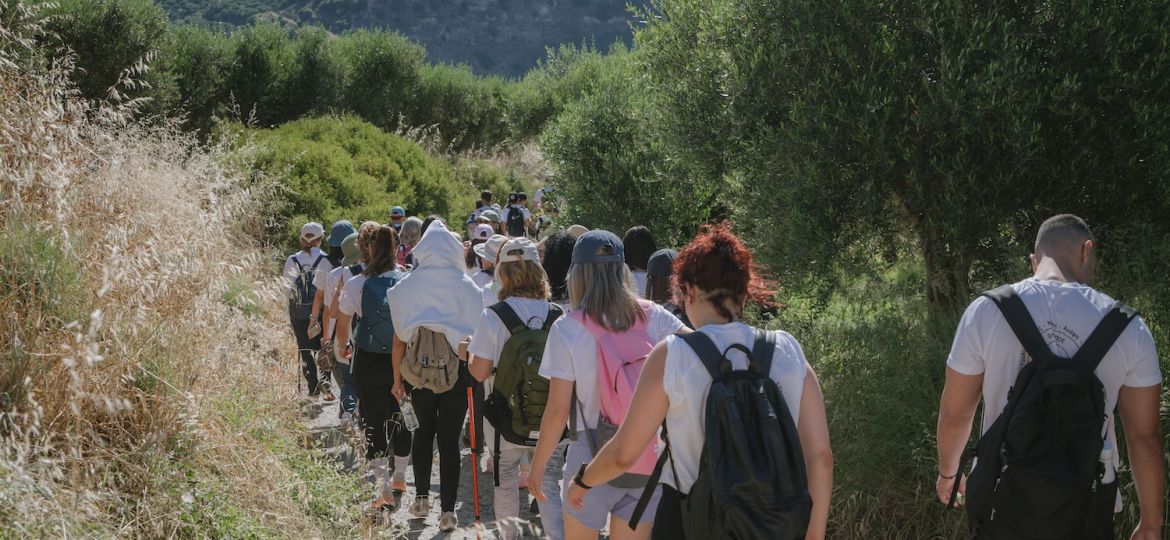
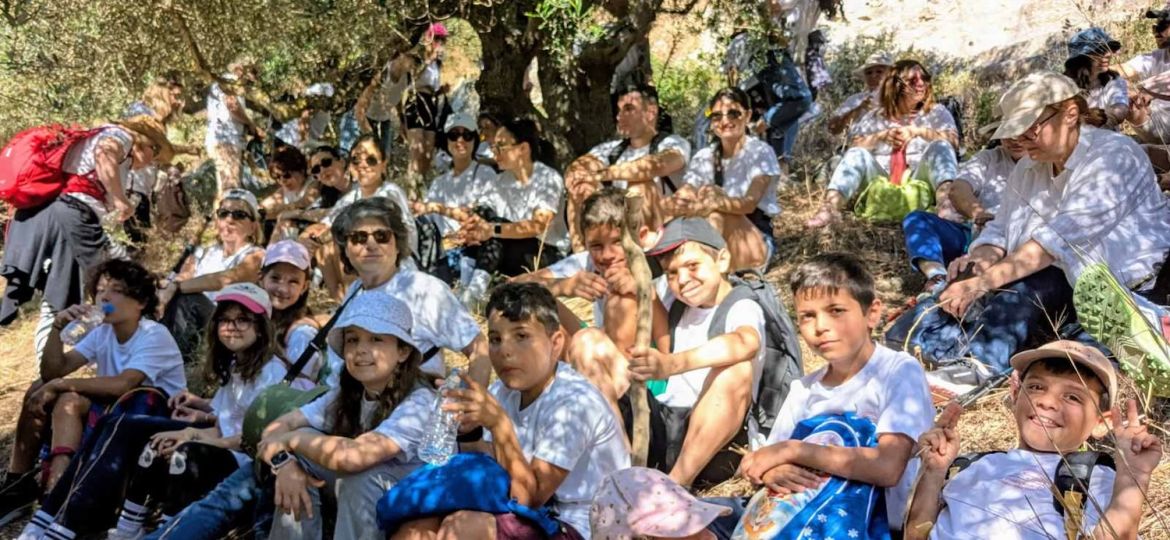
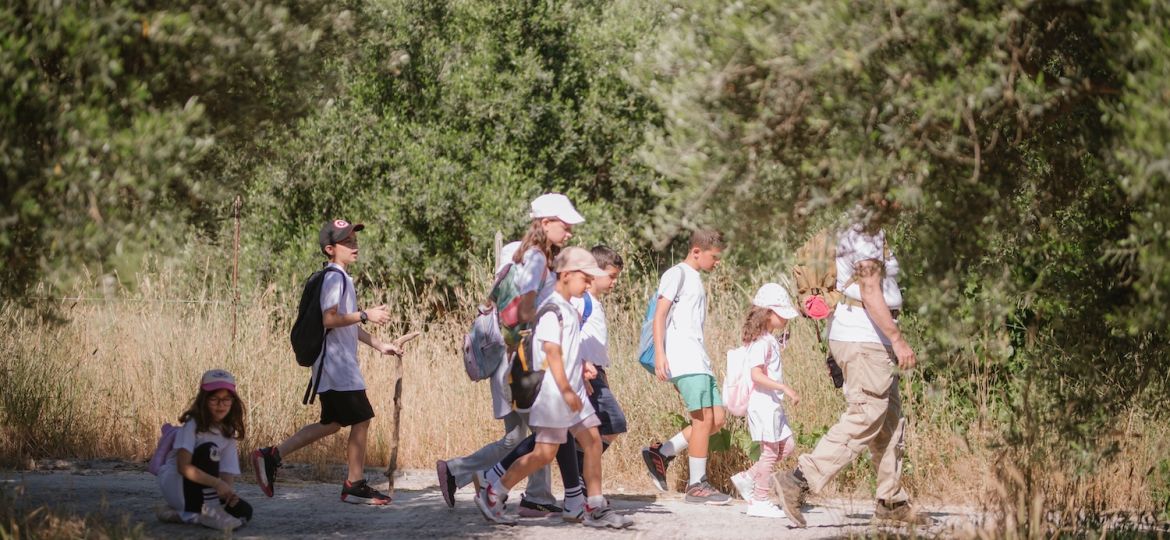
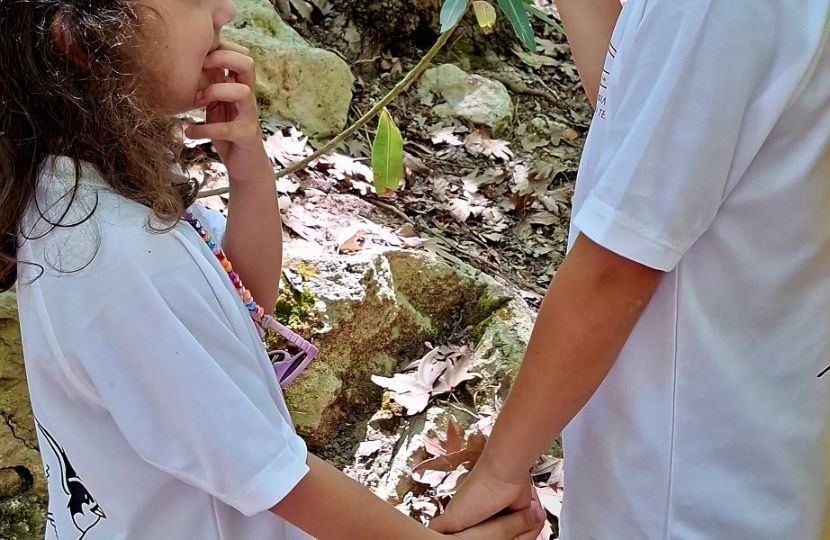
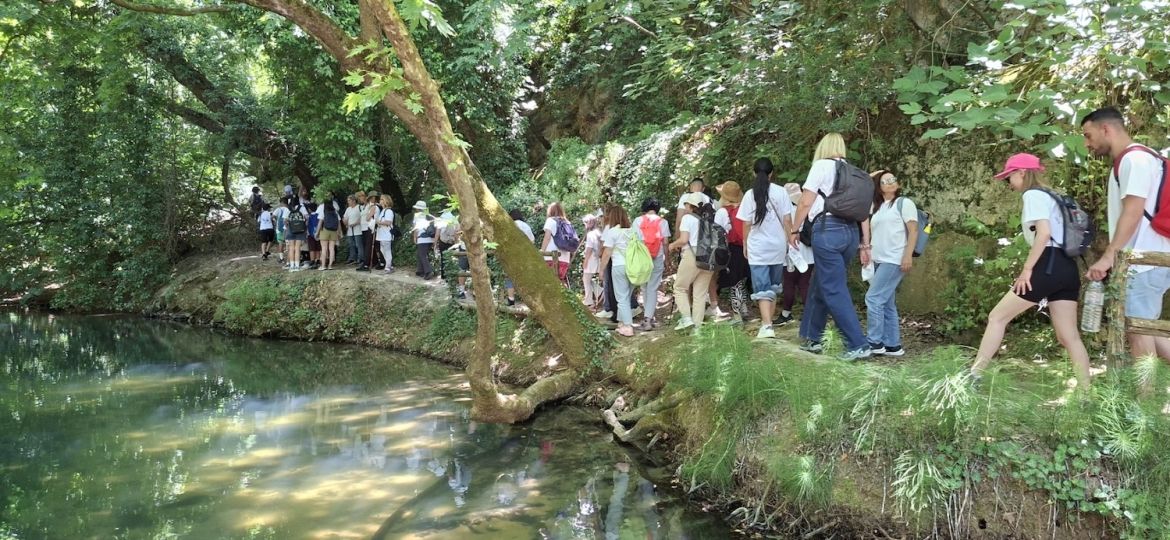
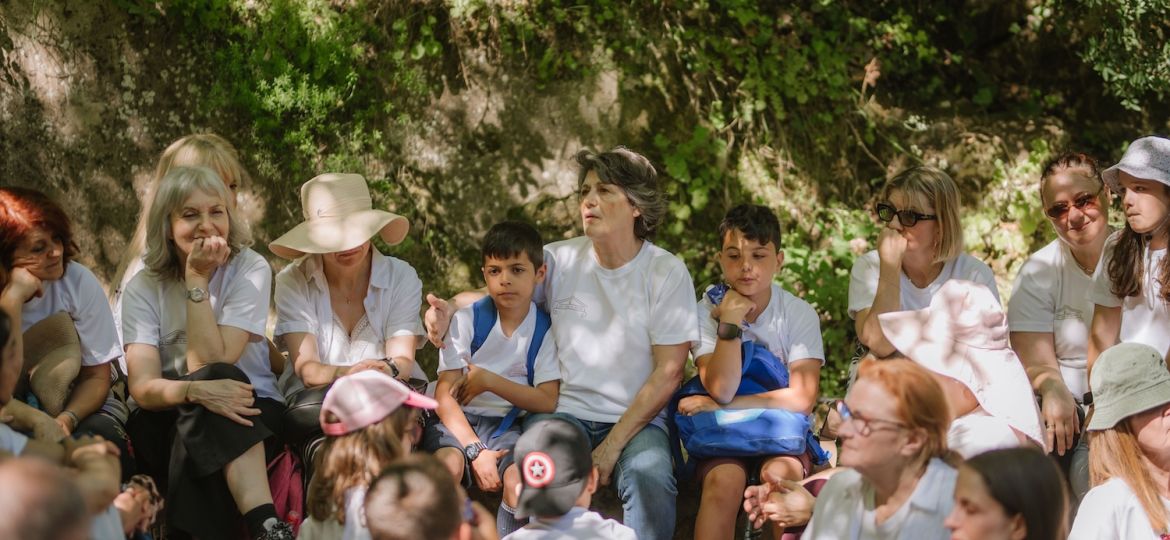
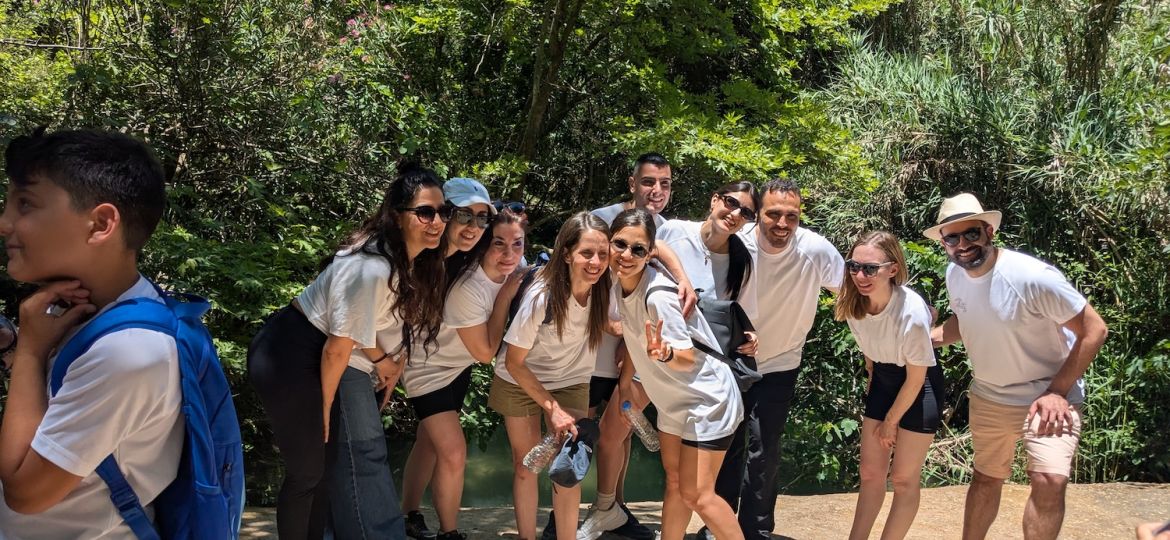
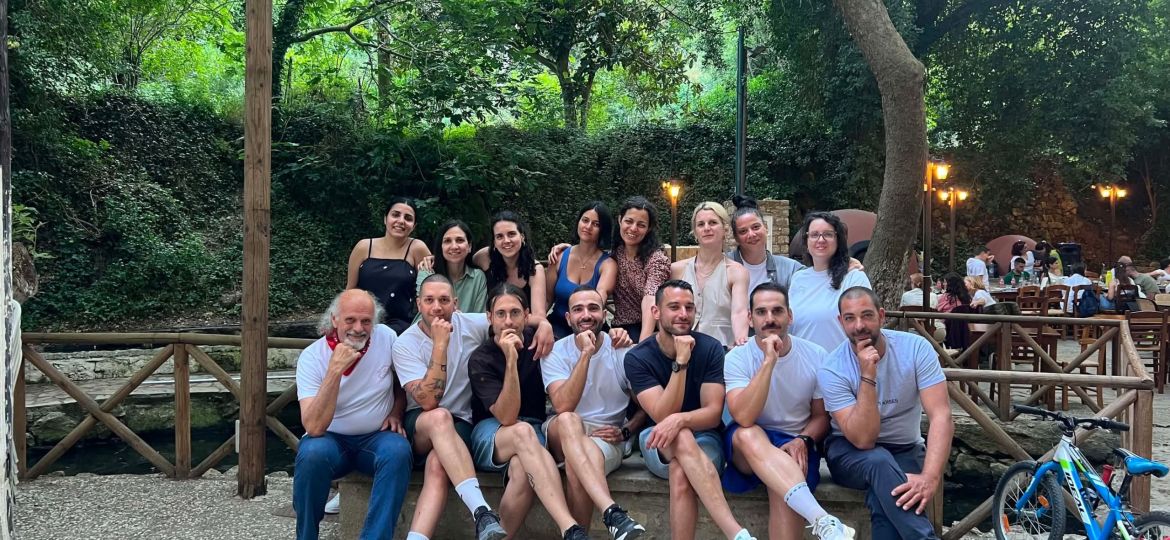
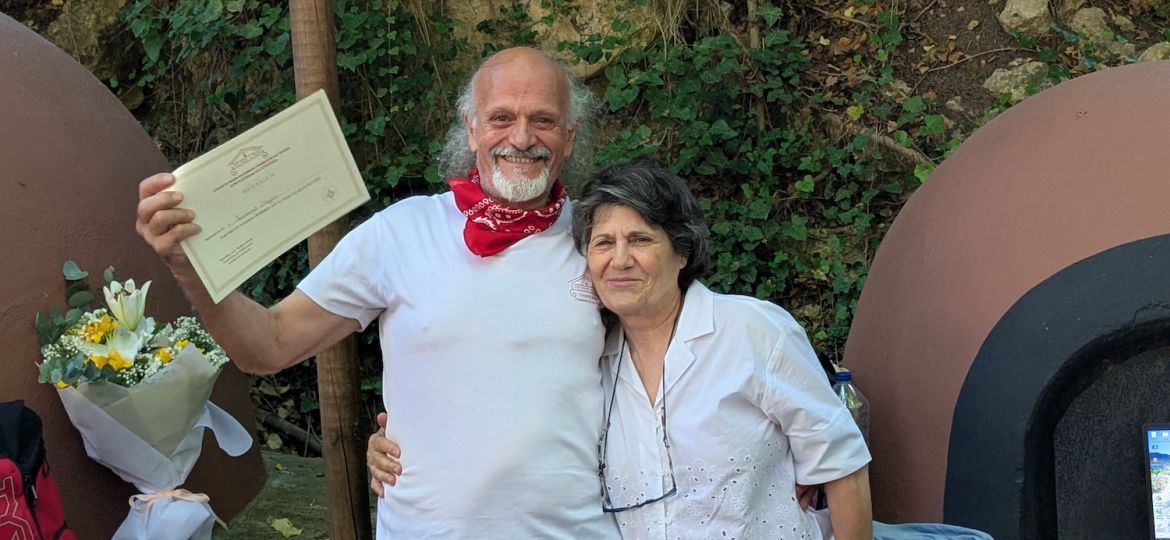
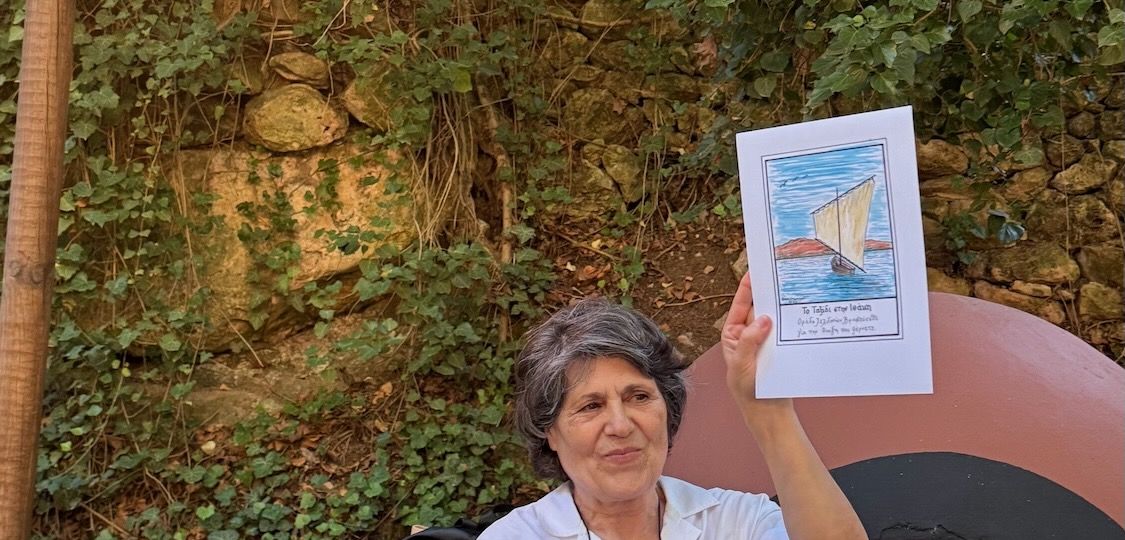
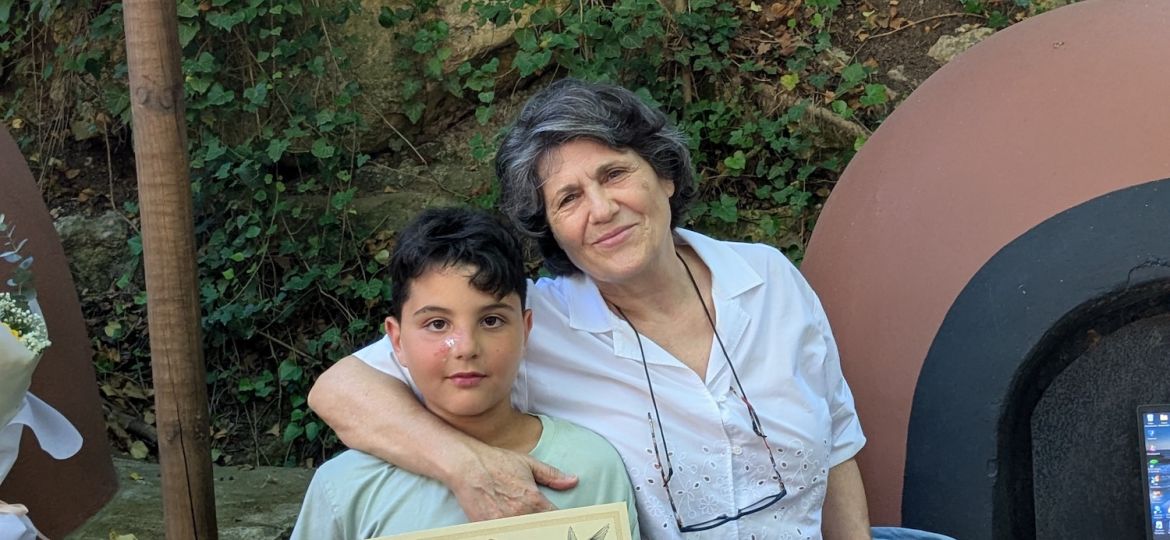
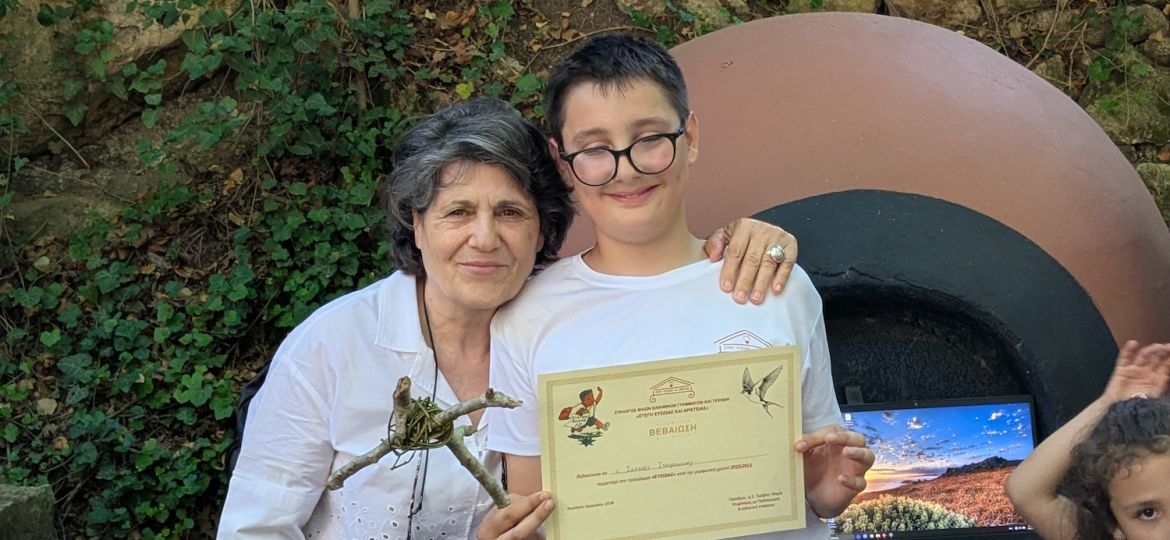
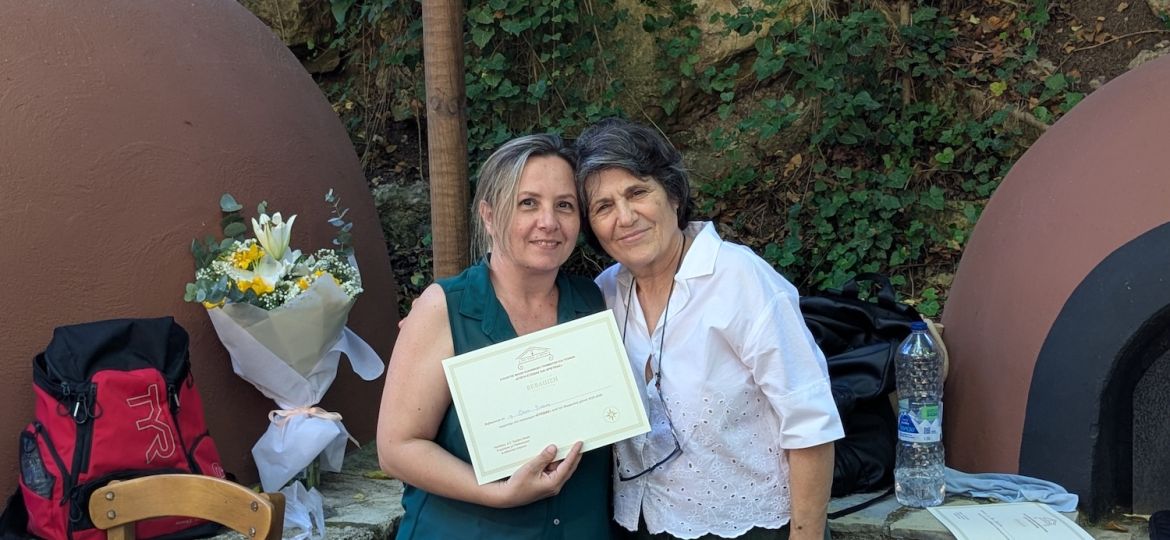
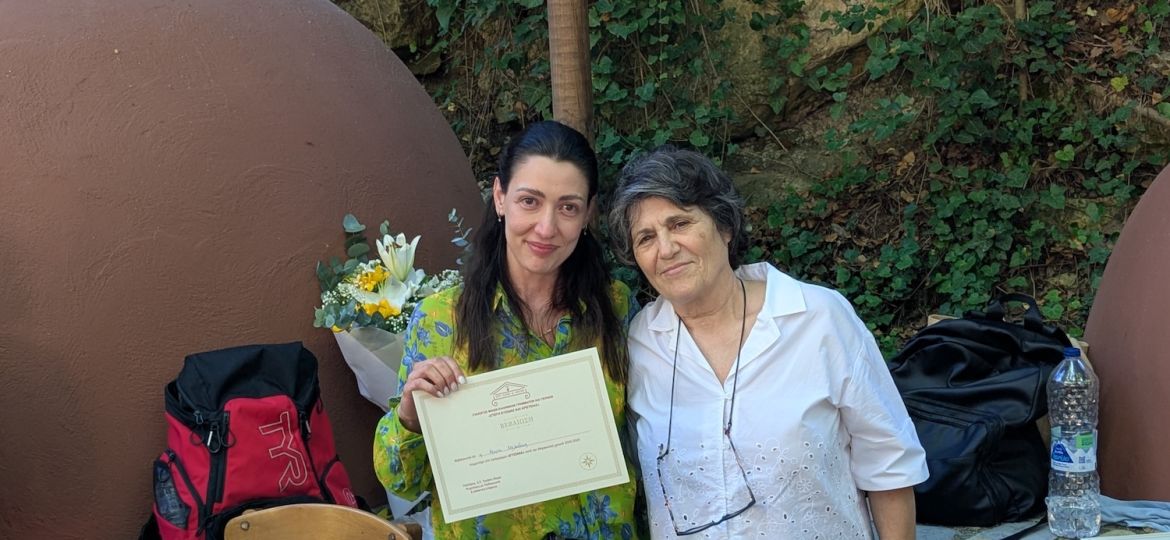
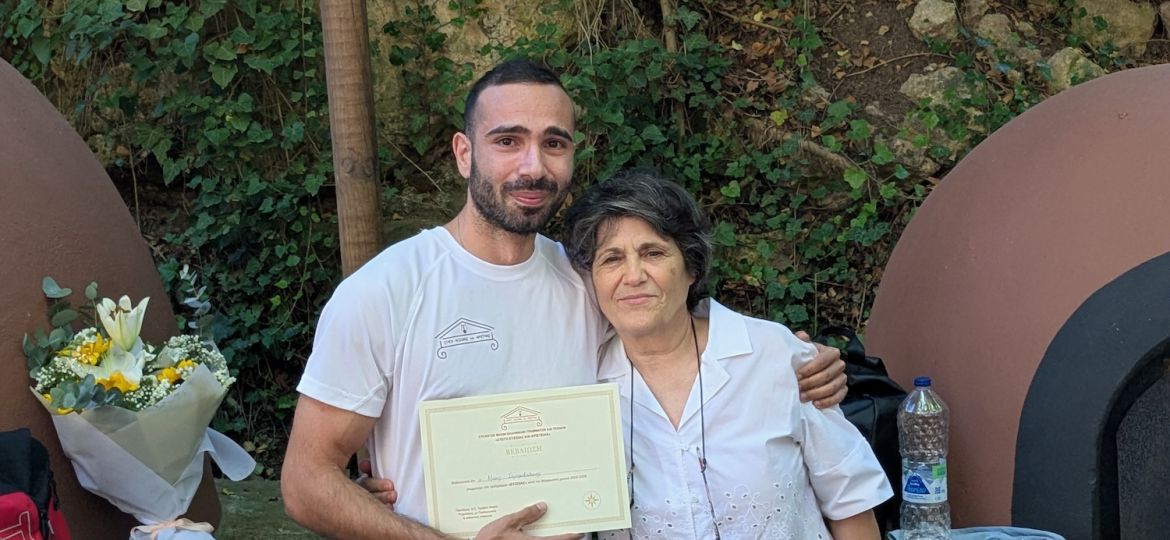
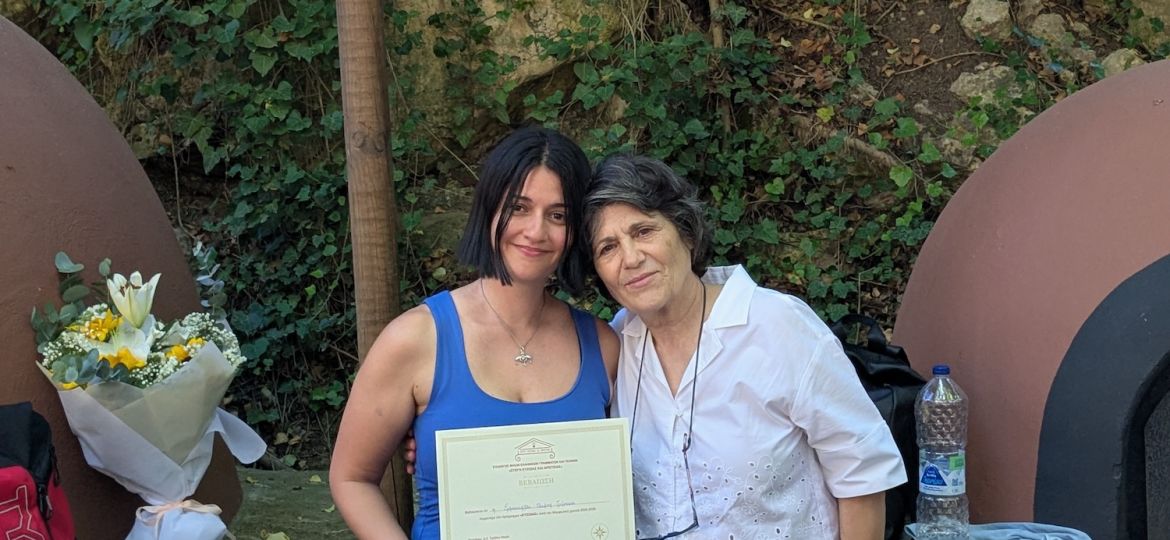
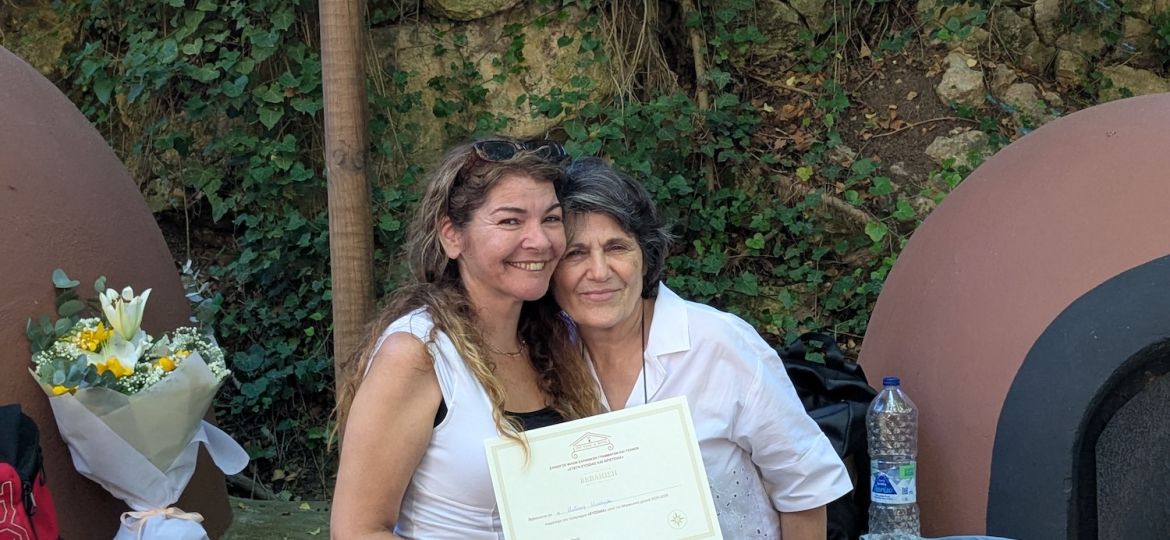
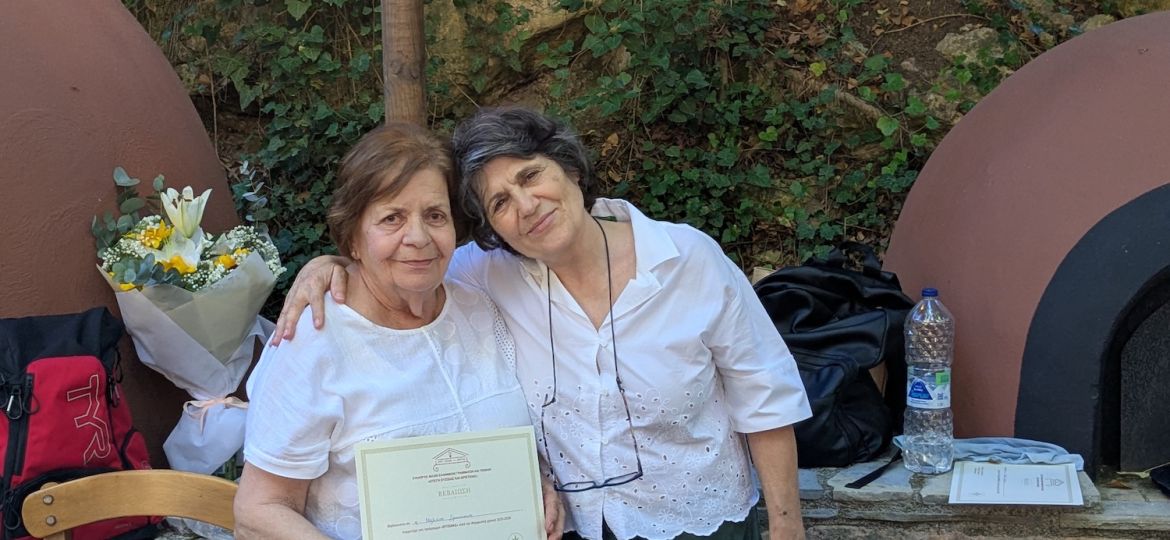
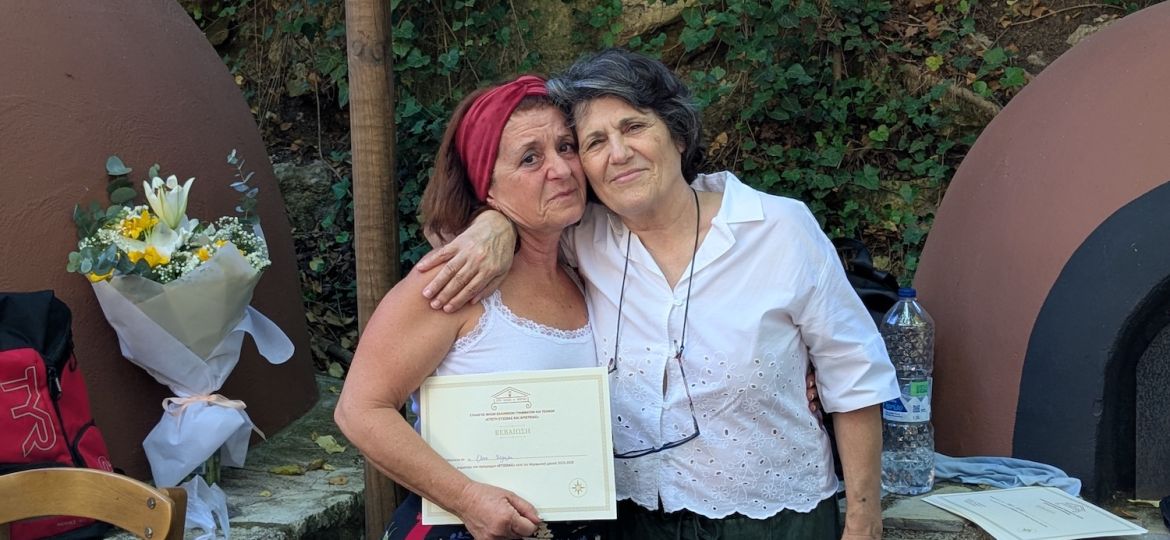
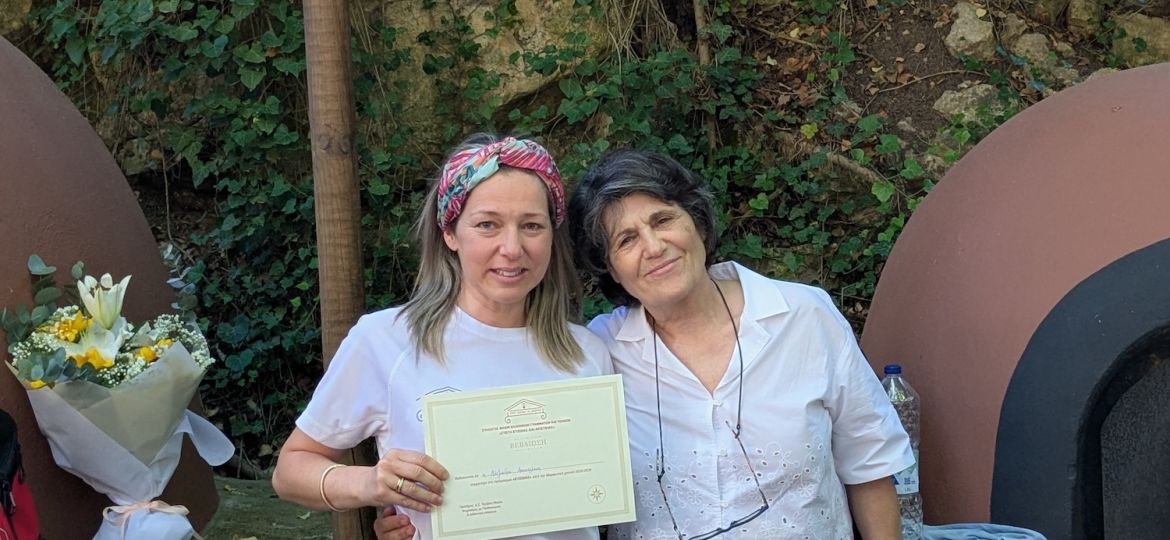
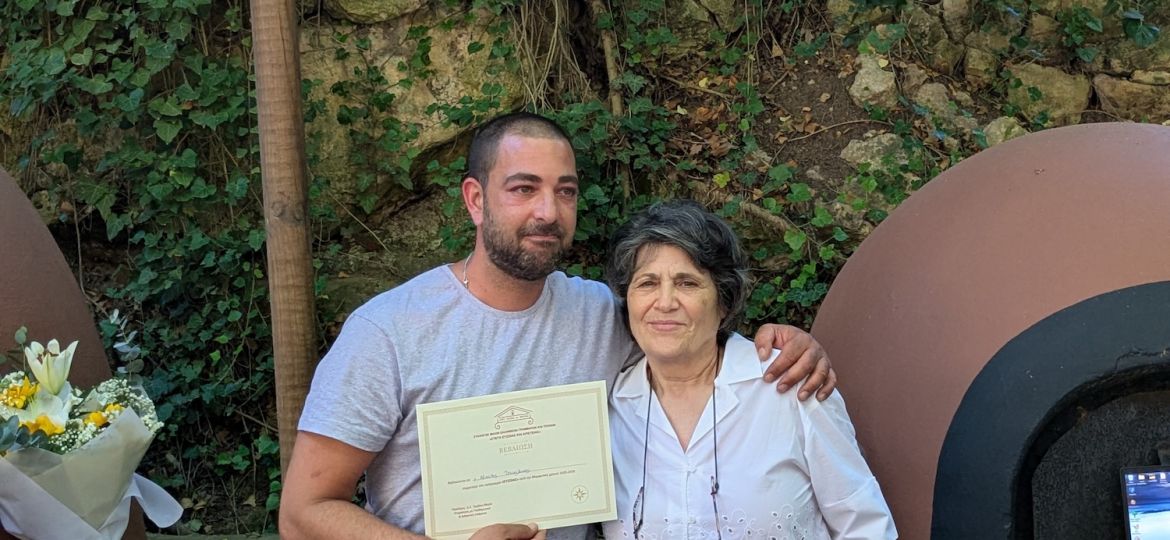
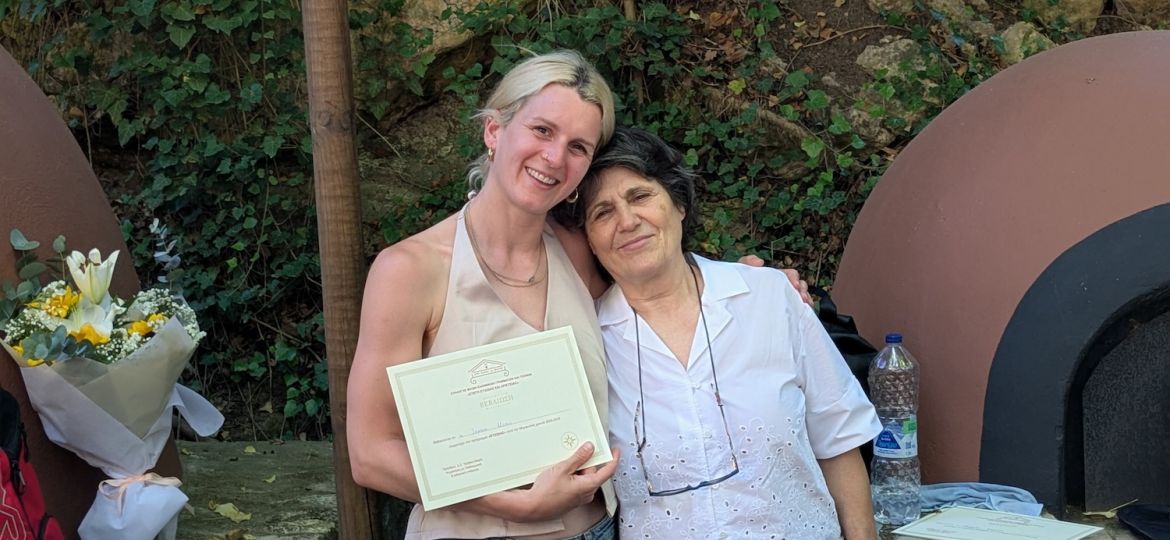
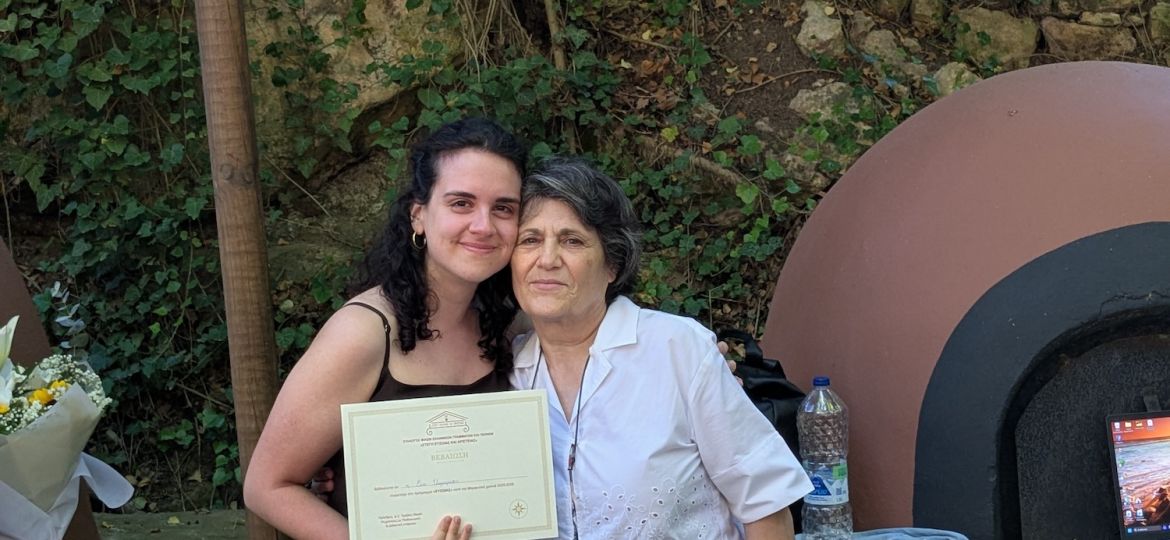
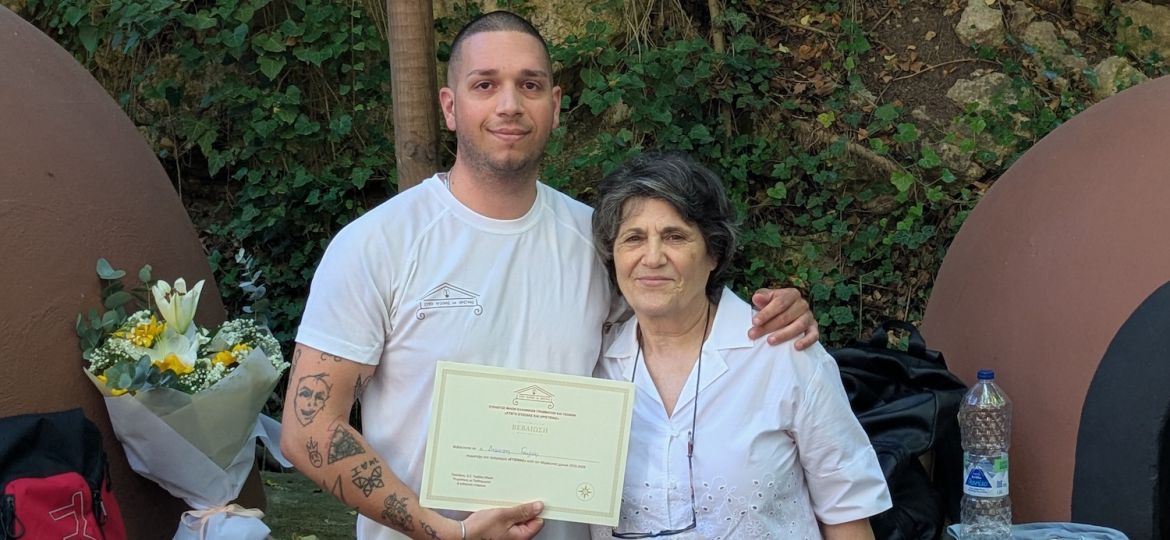
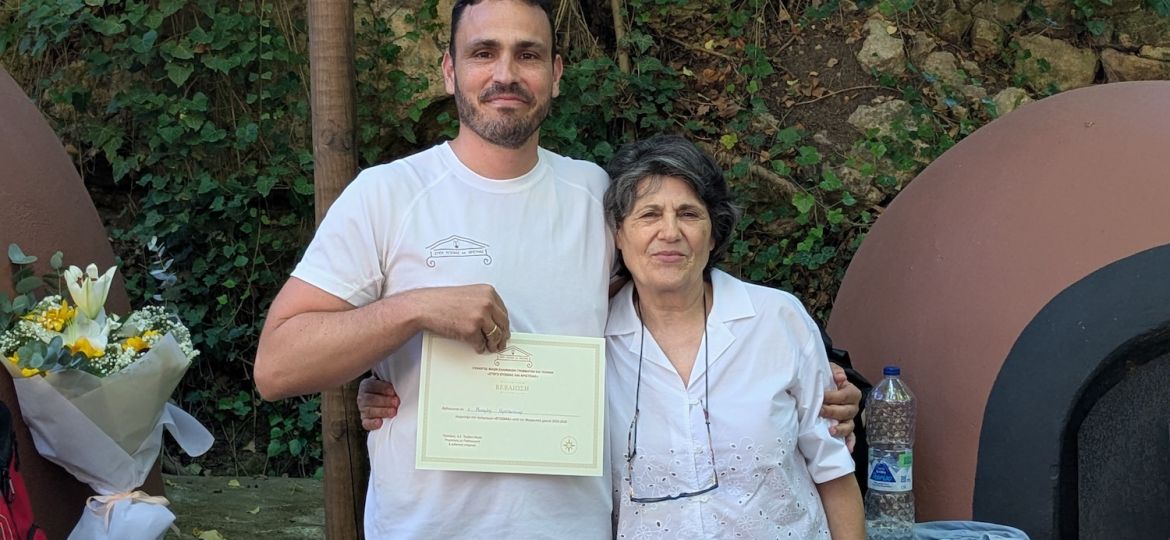
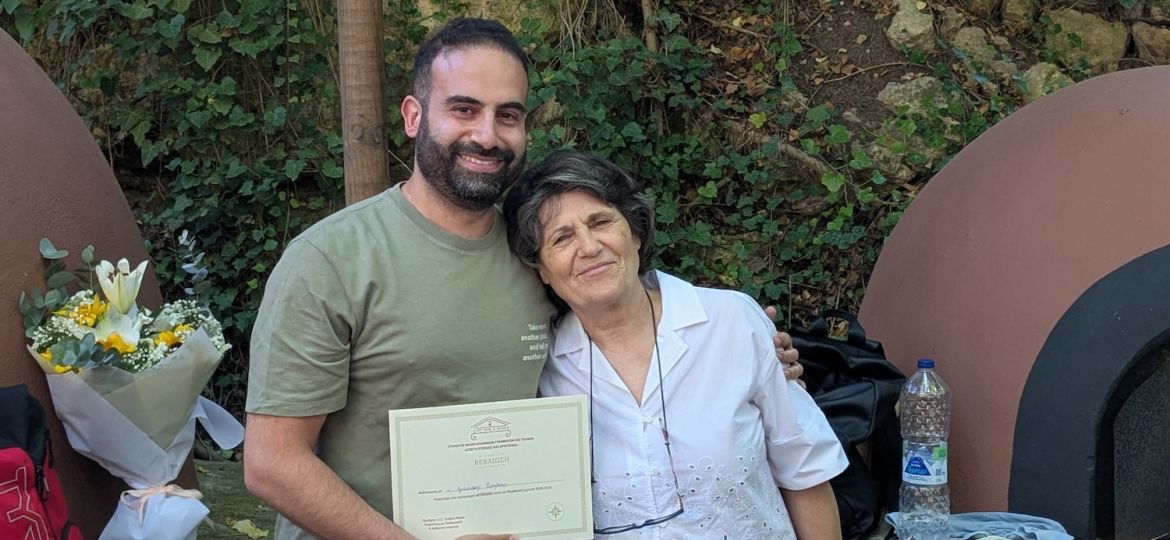
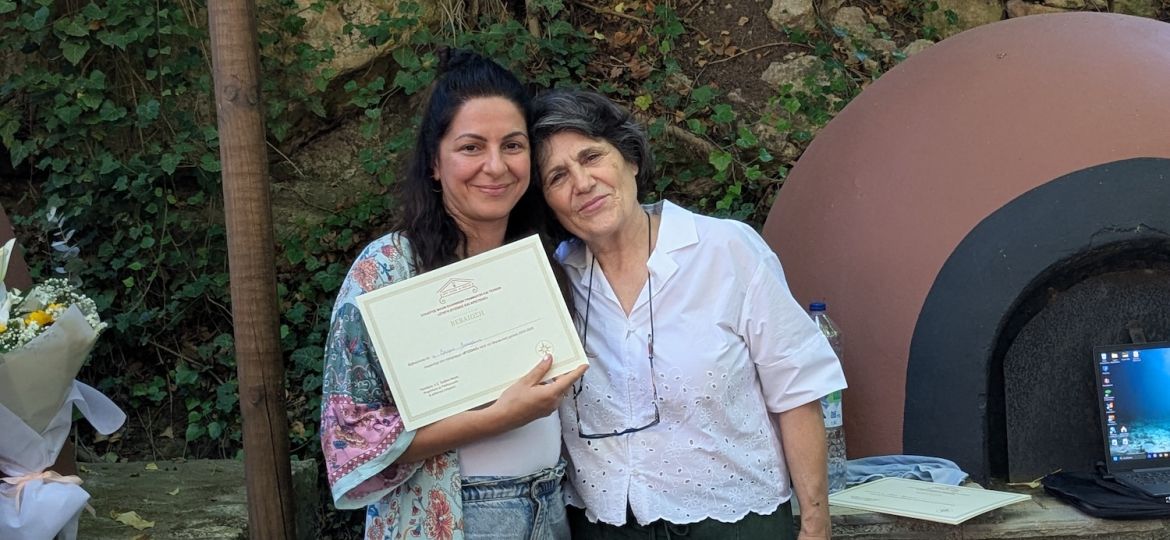
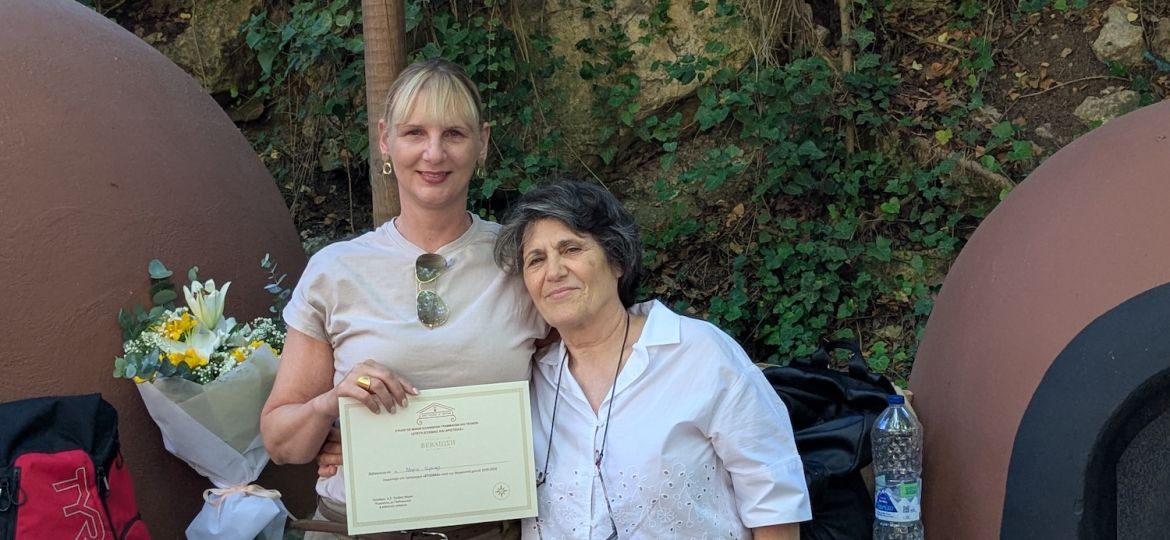
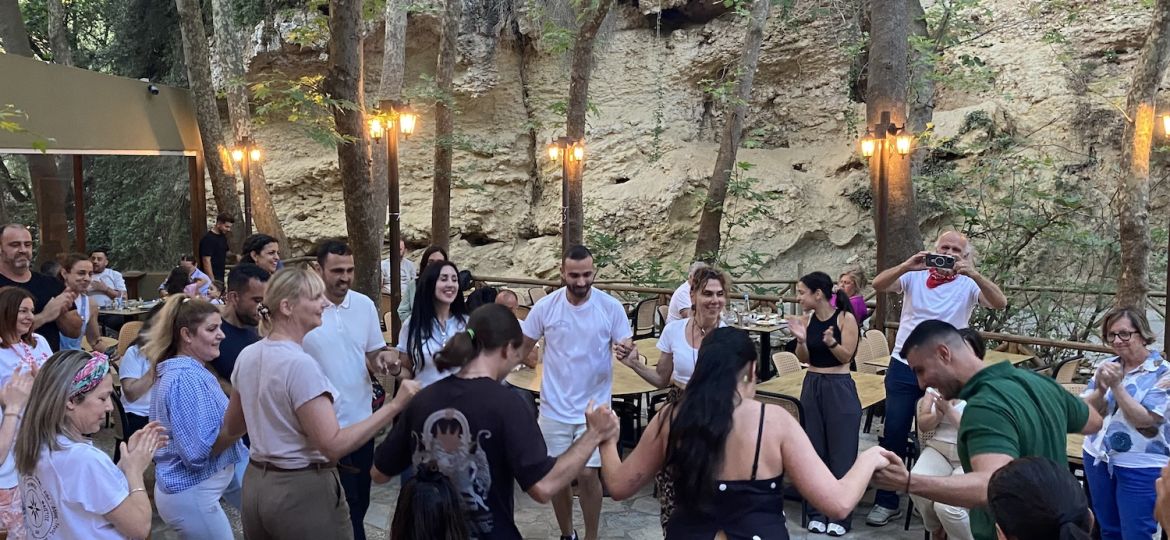
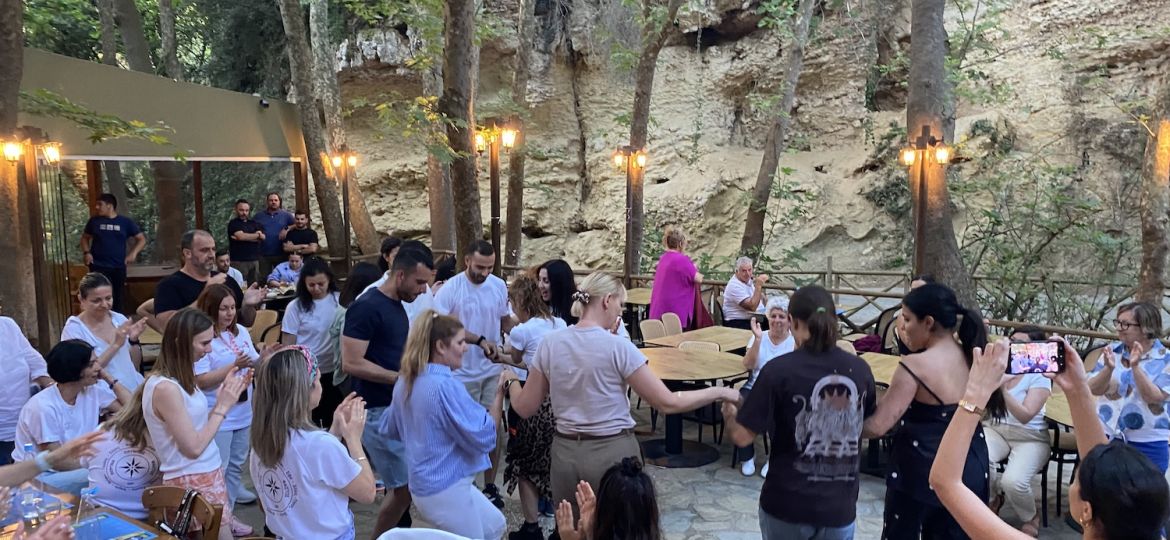
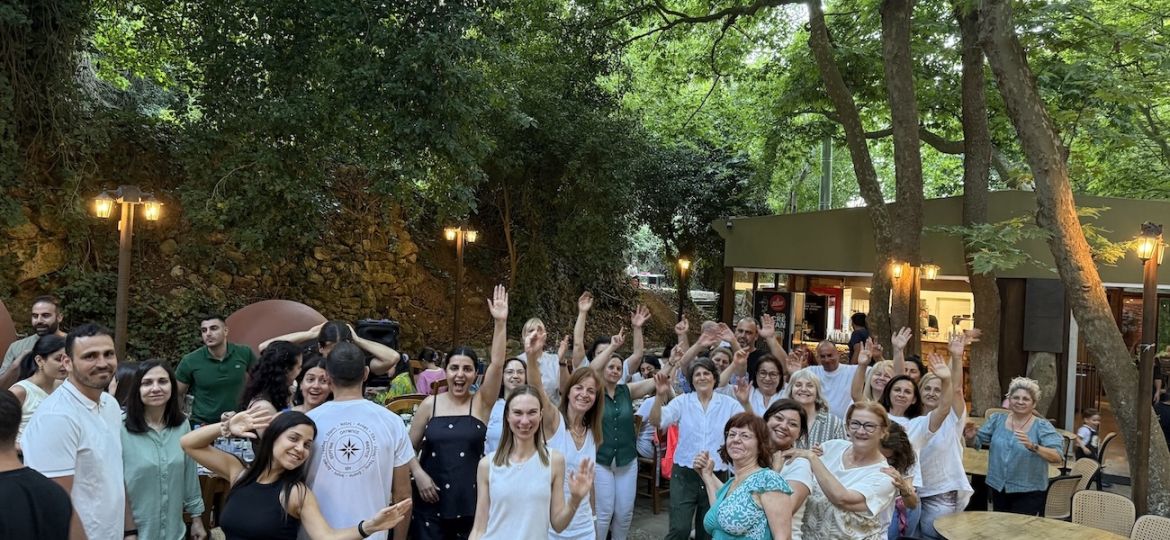
The friends of Stegi, young and old alike, having already chosen the path of self-knowledge and self-understanding, also choose the “place”.
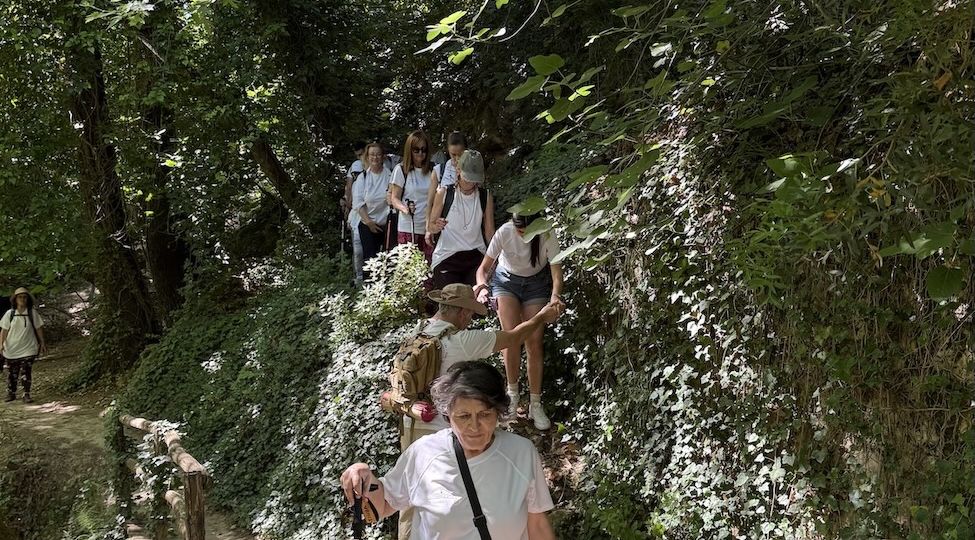
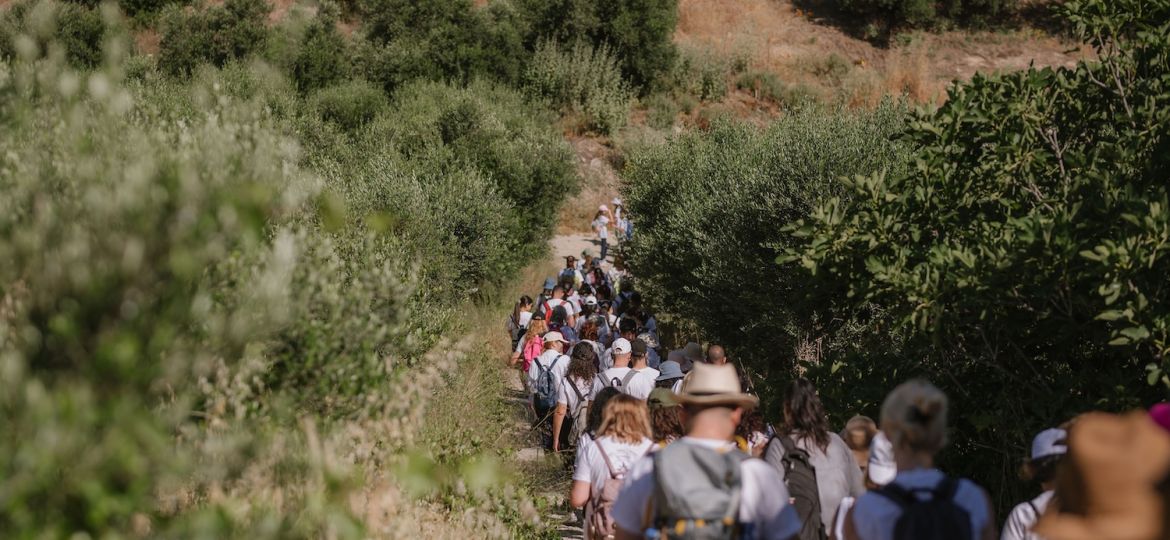
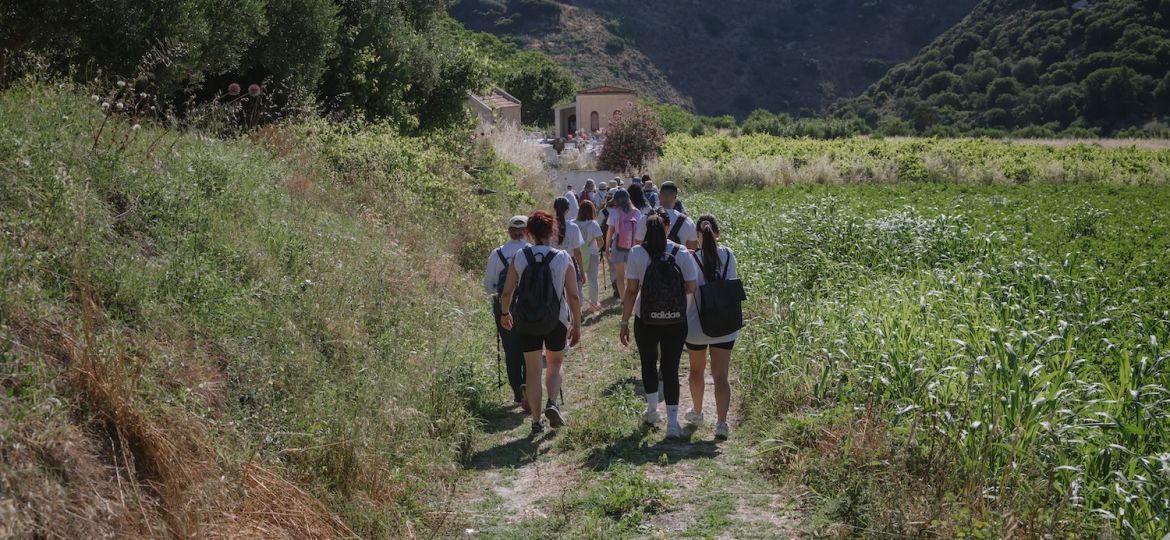
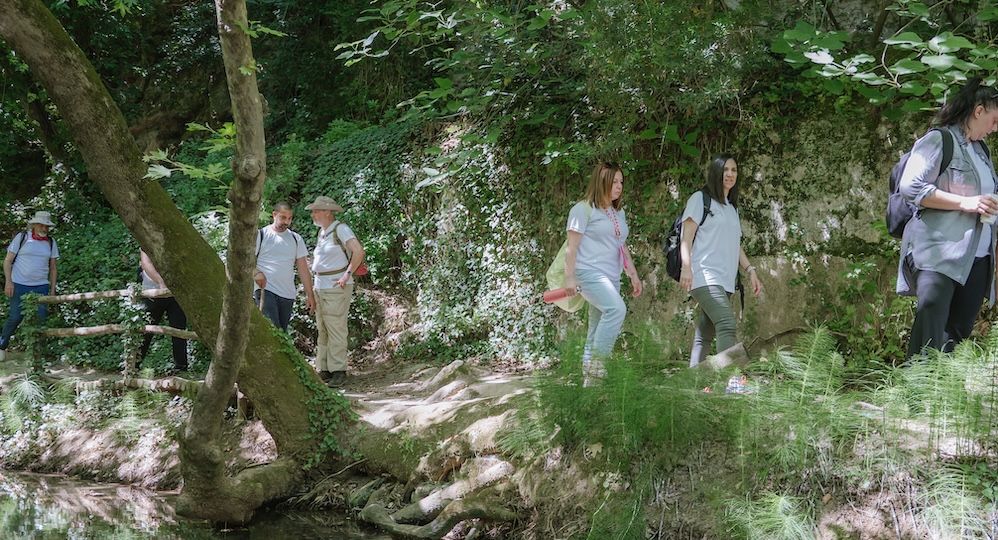
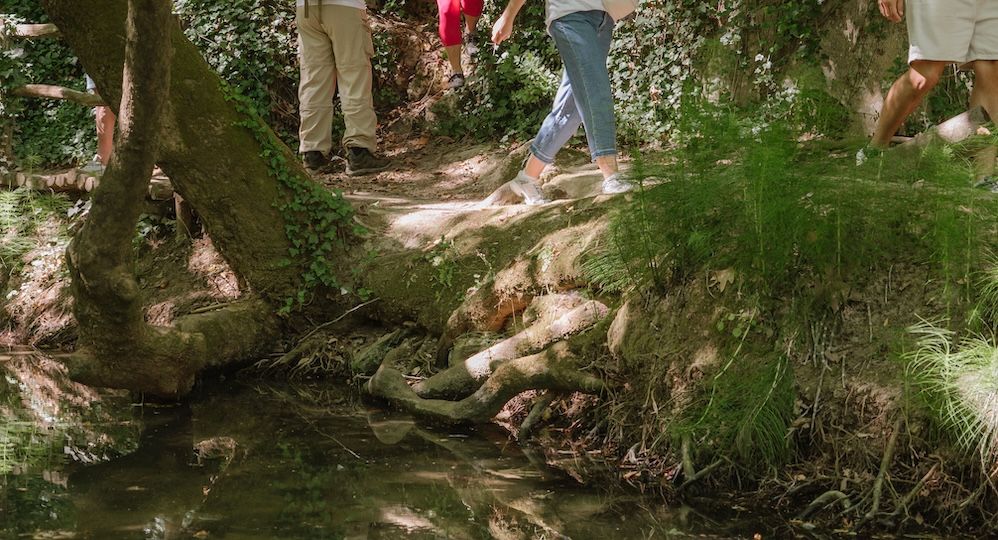
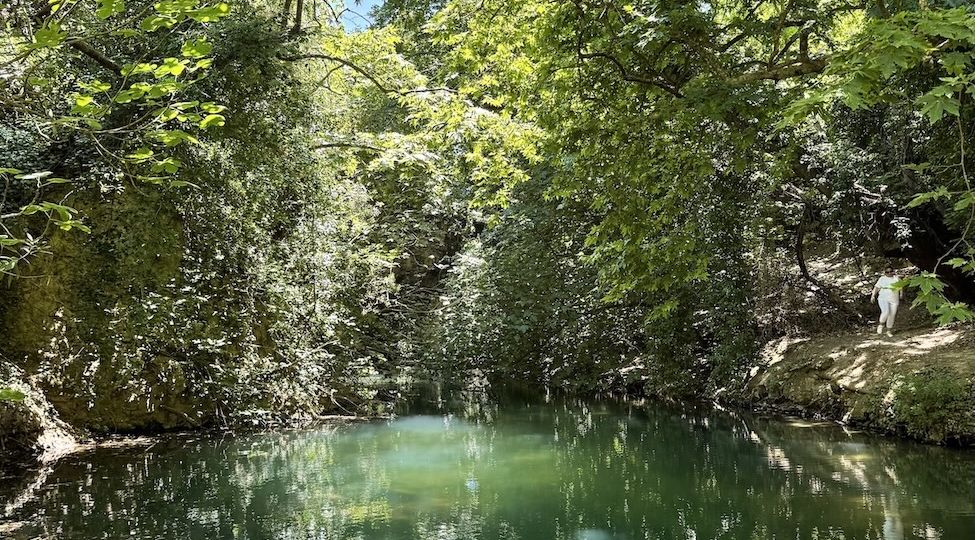
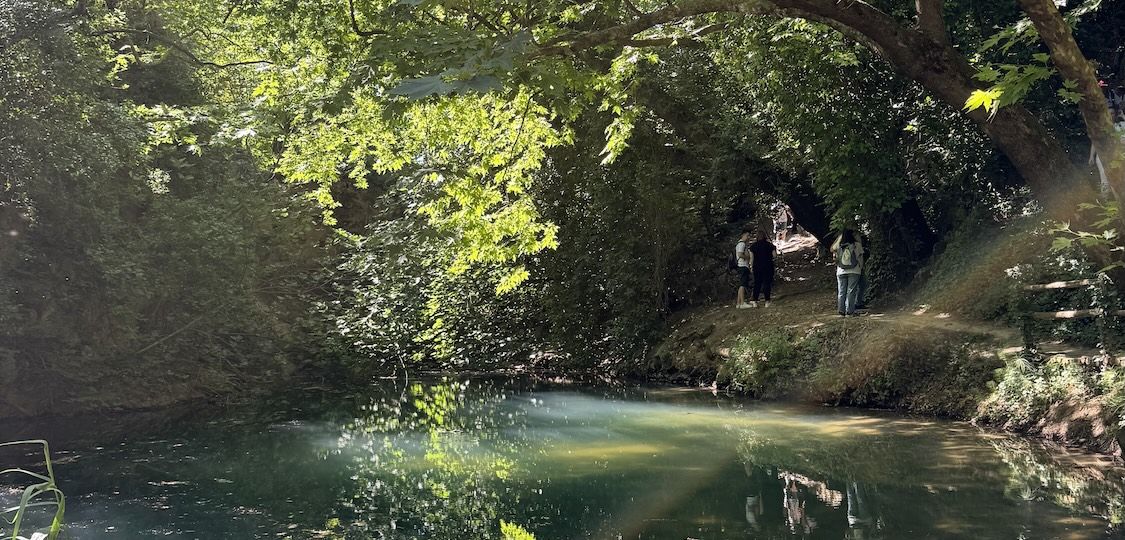
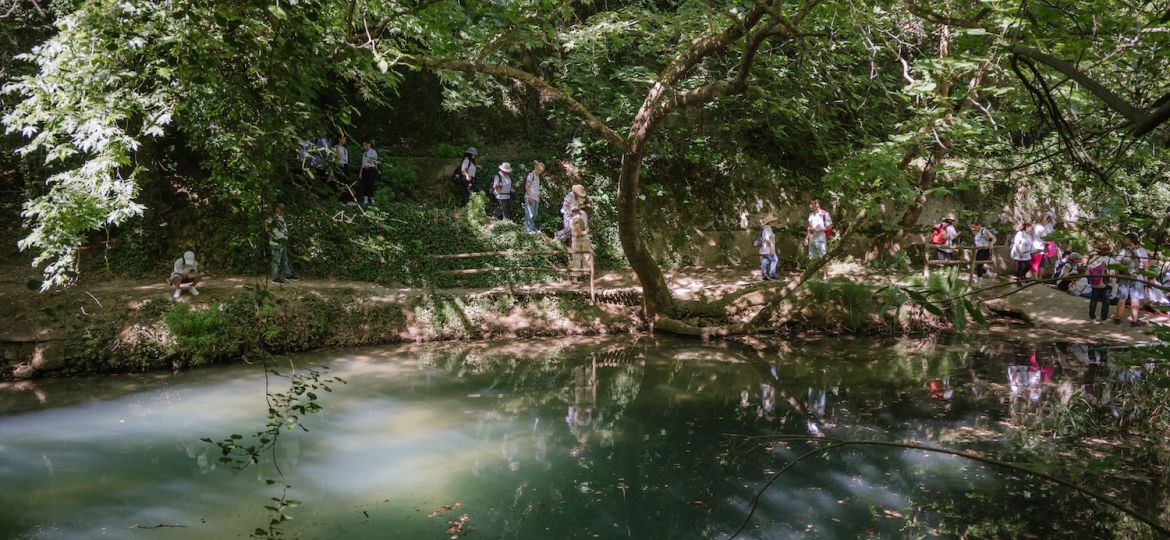
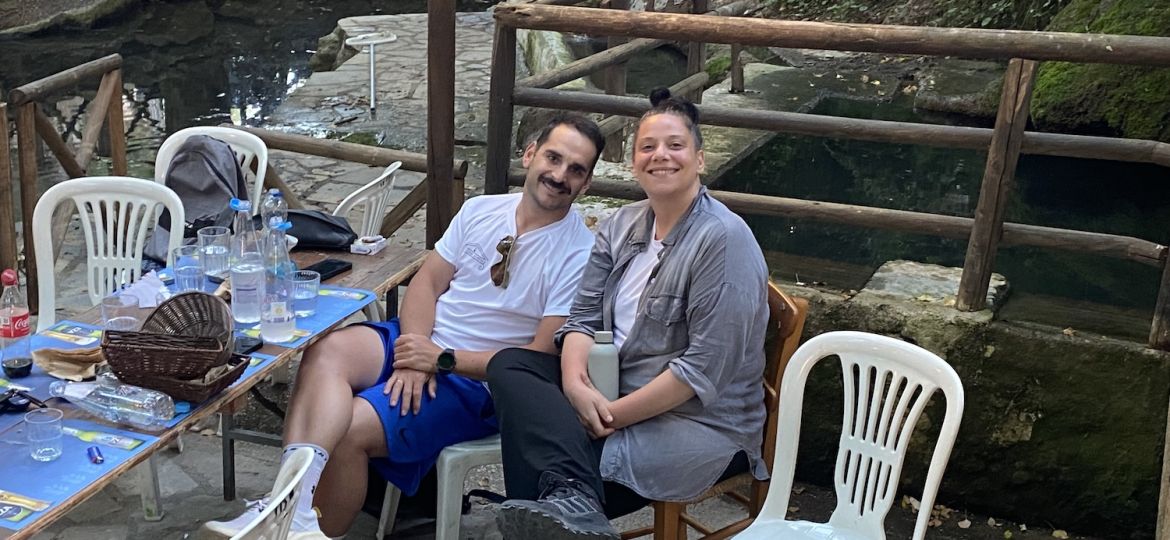
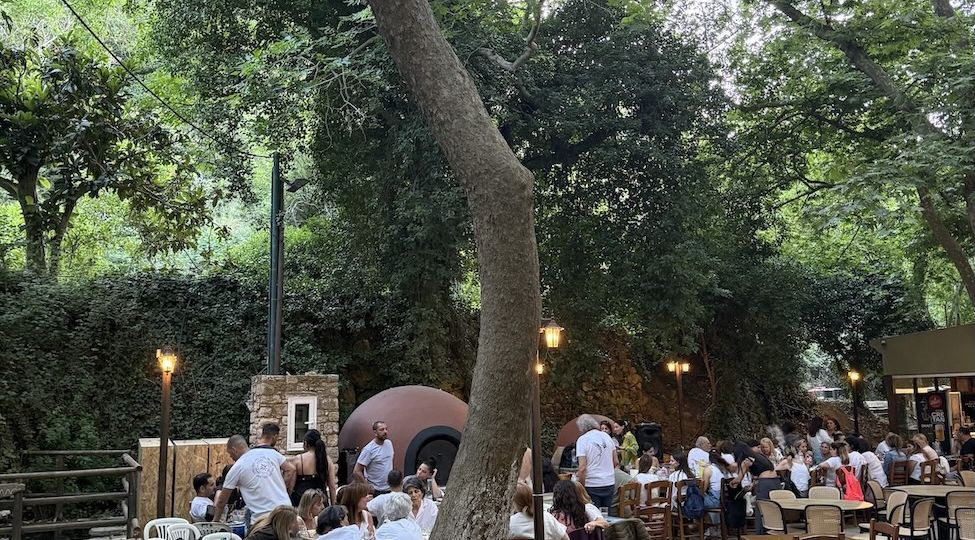
They set out on a hike from Myrtia, Kazantzakis’s birthplace, and head downhill toward the Astrakiano gorge. The valley was still adorned with spring flowers, and the soil was damp from the moisture of the winter rain. One after another, the hikers, weaving invisible bonds with nature, discover the entrance of the gorge leading to Neraidospilio, after less than an hour’s hike. Before you have time to admire the landscape and the Fairies carved into the rock, as you descend, the lake is revealed below. The spring that once supplied the village with water in earlier times. One is left in awe by the beauty of nature: the birdsong, together with the sound of flowing water, like a symphony orchestra that stirs the senses.
Neraidospilio has a history of its own, beyond the myth of the Fairies. In the 1950s, the French archaeologist Paul Faure conducted research and studied the caves of Crete, referring to Neraidospilio as a possible sanctuary of Athena Tritogeneia.  Athena’s epithet Tritogeneia is attested in Homer’s Iliad and Odyssey. In Theogony (lines 924–929), Hesiod presents the genealogy of the goddesses and refers to Athena by the epithet Tritogeneia. In Theogony (lines 930–933), Triton also appears as a god of the waters. According to Greek mythology, Athena, as the embodiment of knowledge, was born from Triton… We recalled that, in Theogony, Hesiod suggests that the mind is trapped in the waters – the emotions… The mind races, gallops even, imagining that if these myths hold any truth, then our thoughts and beliefs remain unyielding and entrenched because they are held hostage by our emotions. The transformation of our thoughts is hindered by our emotions… Thamus, the King of Thebes in Egypt, as Socrates states in Plato’s dialogue Phaedrus, claimed that true knowledge is an inner understanding that arises from within the human being. “physis kryptesthai philei” (nature loves to hide).
Bibliography
- Aristotle. (2020). On the Soul (trans. A. Dotsika). Zitros Publications.
- Aristotle. (2024). Metaphysics. Zitros Publications.
- Heraclitus. (n.d.). On Nature. In Heraclitus: On the Soul (Fragment B123 [DK22B123]). Zitros Publications.
- Hesiod. (2005). Theogony. In Theogony, Works and Days, Shield of Heracles, and Argonautica (trans. & ed. Th. G. Mavropoulos). Zitros Publications.
- Kazantzakis, N. (2023). Askitiki: Salvatores Dei. Dioptra Publications.
- Kant, I. (2020). Critique of Pure Reason (2nd ed., trans. A. Giannaras). Papazisis Publications.
- Homer. (2004). Iliad (trans. Th. G. Mavropoulos). Zitros Publications.
- Homer. (2010). Odyssey (trans. Th. G. Mavropoulos). Zitros Publications.
- Plato. (2006). Republic. Book VII: The Myth of the Cave (trans. Th. Mavropoulos). Zitros Publications.
- Plato. (2006). Phaedrus (trans. P. O. Doikos). Zitros Publications.
- Plato. (2010). Timaeus: The Physical-Metaphysical Platonic Work (trans. Th. G. Mavropoulos). Zitros Publications.
- Spinoza, B. (2009). Ethics (trans. E. Vantarakis). Ekkremes Publications.
- Faure, P. (2004). Sacred Caves of Crete. Vikelaia Municipal Library.
- Heidegger, M., & Fink, E. (1993). Heraclitus Seminar, 1966/67 (E. Fink, Ed.). Northwestern University Press.
No part of this publication may be reproduced or transmitted, in whole or in part, by electronic, photocopying, or any other means without the prior written permission of the author, Maria Terzaki.